Blood Moon Over the Blue Ridge: The Forgotten Shape-Shifter Legends That Appalachia Never Wrote Down
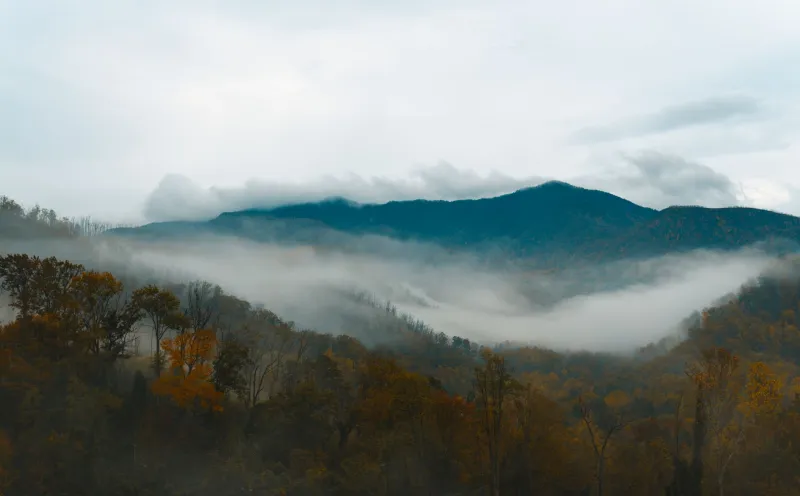
There's a particular kind of dark that lives in the Tennessee mountains. Not the comfortable, cinematic kind you get in a horror movie — the kind with a well-lit monster and a satisfying third act. We're talking about the dark that pools in creek hollows after the last firefly blinks out, the dark that makes old-timers in Sevier County change the subject when certain questions get asked. That dark has a shape. And that shape has been shifting for centuries.
Appalachia doesn't get nearly enough credit in the werewolf fiction conversation. When most folks think about lycanthrope mythology, their minds jump to Eastern European folklore — Romanian villages, full-moon curses, silver bullets. But if you dig into the cultural sediment of East Tennessee, you'll find something that predates those imported traditions and runs every bit as deep. Maybe deeper.
Where Three Traditions Collide
The supernatural mythology of the Tennessee mountains didn't grow from a single root. It's a graft — a strange and sometimes contradictory fusion of at least three distinct storytelling traditions that collided in these hills over the course of several hundred years.
First, there's the Cherokee legacy. Long before European settlers ever laid eyes on the Smoky Mountains, the Cherokee people had developed a rich and nuanced cosmology that included beings capable of moving between human and animal forms. These weren't simple werewolf archetypes — the traditions were far more complex, tied to spiritual practice, medicine, and the consequences of transgressing natural law. Scholars are careful to note that lumping Cherokee concepts into Western monster categories does a disservice to their sophistication, but the thematic overlap with shape-shifter mythology is undeniable.
"What the Cherokee traditions describe isn't a curse in the Western sense," says Dr. Mara Ellison, a folklorist based in Knoxville who has spent years documenting oral traditions in the Southern Appalachians. "It's more like a rupture — a person who has violated their relationship with the natural world so severely that the boundary between human and animal collapses. That's actually a much more psychologically interesting premise than 'you got bitten under a full moon.'"
Layered on top of that foundation came the Scots-Irish immigrants who flooded into the Appalachian backcountry throughout the 18th century. They brought their own creature catalog — stories of skinwalkers, fetch-dogs, and something the old folks in parts of Unicoi County reportedly called a "turnskin," a term that doesn't appear in any mainstream folklore index but shows up in enough independent accounts to suggest it was genuinely regional. These settlers weren't starting from scratch. They were grafting their Old World anxieties onto a landscape that already had its own supernatural grammar.
The third layer is harder to categorize: the homegrown mountain superstition that evolved in relative isolation over generations. Communities in Carter County, cut off from the broader cultural currents by terrain and poverty, developed their own localized mythologies. Some of these stories were never written down. They lived in the mouths of grandmothers and the memories of men who've been dead for sixty years.
Sevier County's Uneasy Silence
If you spend any time talking to older residents of Sevier County — the kind of folks who grew up before Gatlinburg became a tourist corridor — you start noticing a pattern. There are stories about the woods at night that get told in a certain register. Not the ghost-story register, not the tall-tale register. Something quieter and more uncomfortable than either.
Local historian and fiction writer James Cord, who grew up in a small community outside Pittman Center, remembers hearing fragments of these stories as a kid. "There was always this thing people would say about certain families," he recalls. "Not mean-spirited gossip, just... a kind of warning. Like, 'don't go up on that ridge after dark, especially around the dark of the moon.' And it wasn't about bears. Everybody knew what bears were. This was something else."
Cord has spent the last decade weaving elements of these half-remembered warnings into his fiction, trying to reconstruct a mythology that was never fully articulated. "The frustrating and fascinating thing about Appalachian supernatural tradition is that so much of it was deliberately vague," he says. "People didn't always want a clear picture of what they were afraid of. The vagueness was protective. If you couldn't name it precisely, maybe it couldn't name you."
The Unicoi Tradition and the Problem of Documentation
Unicoi County presents a particularly interesting case study in how Appalachian shape-shifter mythology resists documentation. The county's relative geographic isolation — even today, parts of it feel genuinely remote — meant that oral traditions persisted there longer than in more accessible communities. But that same isolation made systematic collection nearly impossible.
What fragments do exist suggest a local tradition centered on what some accounts describe as a "ridge-runner" — not the common Appalachian slang for a mountain person, but something more specific and considerably more alarming. Descriptions are inconsistent, as you'd expect from oral tradition, but several recurring elements emerge: movement on the ridgelines at night, sounds that weren't quite animal and weren't quite human, and a strong association with boundary spaces — creek crossings, fence lines, the edges of clearings.
"Boundary spaces are enormously significant in Appalachian supernatural tradition generally," Dr. Ellison notes. "The threshold — the place between one thing and another — is where the rules get unstable. It makes complete sense that a shape-shifter mythology would cluster around those spaces. The creature itself is a kind of living threshold."
Why This Matters for Werewolf Fiction
Here's the argument we want to make clearly: Appalachian shape-shifter mythology isn't just interesting historical trivia. It's a largely untapped creative resource that could push the werewolf fiction genre somewhere genuinely new.
The dominant werewolf narrative in American popular culture is still essentially European in its bones — the curse model, the transformation-as-loss-of-control model, the silver-bullet resolution model. It's a solid framework, but it's been worked pretty hard. What the Appalachian tradition offers is a fundamentally different set of premises. Transformation as consequence rather than infection. The animal state as revelation rather than corruption. The community's relationship with the shape-shifter as something more ambiguous than simple terror.
"There's so much more moral complexity available in these traditions," Cord argues. "The European werewolf is basically a victim or a monster. The Appalachian version — if you can even call it that, since the tradition resists that label — is something harder to categorize. Which makes it much more interesting to write."
The Stories That Deserve to Be Told
We're not going to pretend these traditions are easy to access or simple to represent responsibly. The Cherokee components in particular require careful handling — these are living cultural traditions, not a creative commons resource for non-Native writers to raid at will. Getting it right means doing the work: talking to community members, reading widely, and being honest about the limits of your perspective.
But the broader project — excavating the shape-shifter mythology buried in Appalachian folk tradition and building a distinctly Southern werewolf fiction out of it — that's a project worth pursuing. The raw material is extraordinary. The hollows and ridgelines of East Tennessee have been holding these stories for a long time, waiting for someone to listen carefully enough to hear them.
The howl has always been here. We're just finally starting to write it down.