Neon Fangs and Fiddle Strings: Why Nashville Is the Ultimate Werewolf Story Setting
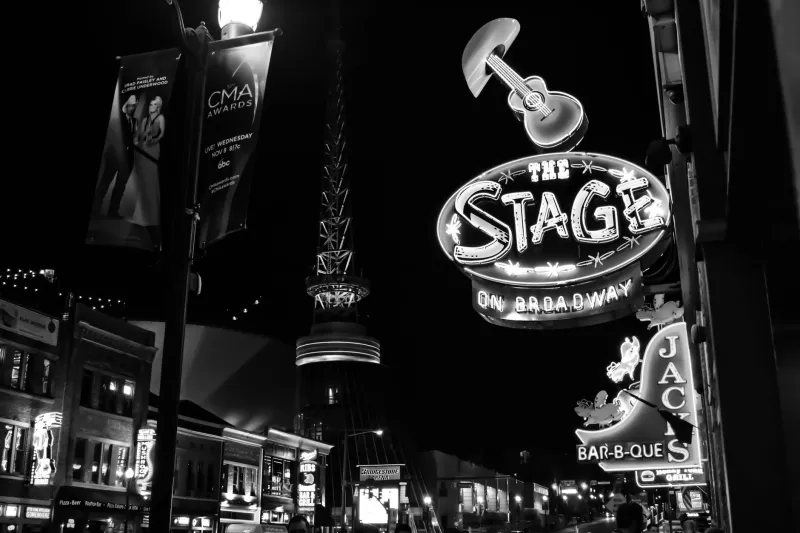
There's something that happens on Lower Broadway after midnight that's hard to explain to someone who hasn't been there. The neon bleeds into the puddles on the sidewalk, the bass from three competing bands thumps through the walls of every bar simultaneously, and the crowd — tourists, locals, dreamers, drifters — moves like a single living thing. It's electric. It's a little feral. And honestly? It's crying out for a werewolf story.
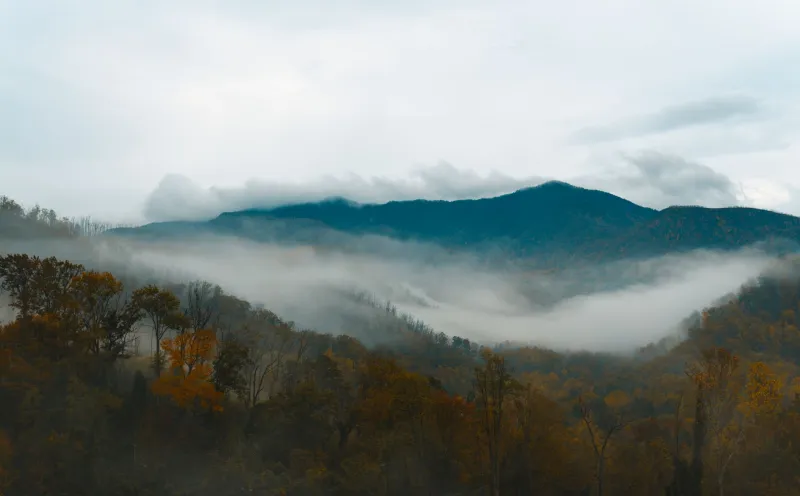
We've spent a lot of time around here talking about the deep woods mythology of Appalachia, the ghost hollows of East Tennessee, the fog that rolls off the Smokies like something ancient and alive. But Nashville deserves its own chapter in the Tennessee supernatural playbook. The city isn't just a music mecca — it's a pressure cooker of ambition, transformation, and raw emotion. Sound familiar? Because that's also a pretty solid elevator pitch for a werewolf narrative.
The Transformation Metaphor Is Already Built In
Country music has always been about change. You roll into Nashville with a guitar case and a dream, and either the city makes you or it breaks you. Artists talk about "finding their sound" like it's something that happens to them rather than something they choose — a kind of awakening. The language of transformation is baked right into the culture.
Now layer a lycanthrope storyline on top of that. Your protagonist is a singer-songwriter from a small town outside of Knoxville, maybe, who starts noticing something's wrong on the nights before a full moon. The hunger isn't just for success anymore. The crowd at the honky-tonk isn't just feeding their applause — it's feeding something older and deeper. The metaphor practically writes itself, and it doesn't feel forced because Nashville already runs on that same emotional voltage.
Fan fiction communities on platforms like Archive of Our Own and Wattpad have been quietly exploring this overlap for years. Searches for "werewolf Nashville" or "shapeshifter country music" turn up dozens of original works, many of them surprisingly well-crafted, that use the music industry's cutthroat environment as a stand-in for pack dynamics and territorial aggression. One popular fan-created universe, set loosely in a fictionalized version of the Bluebird Cafe's open-mic circuit, imagines a whole network of lycanthropes embedded in Nashville's session musician community — wolves who've learned that the best way to blend in is to be really, really good at playing steel guitar.
The Grand Ole Opry as Sacred Ground
If you're building a werewolf mythology inside Music City, you have to reckon with the Opry. There's no getting around it. That building — especially the original Ryman Auditorium, the so-called "Mother Church of Country Music" — radiates a kind of spiritual gravity that even non-believers feel when they walk through the doors.
Several independent authors working in the paranormal romance and dark fantasy spaces have used the Ryman specifically as a kind of sacred or contested site in their Tennessee werewolf narratives. The logic tracks: if you're going to establish that Nashville has a supernatural underbelly, the oldest and most hallowed venue in town is either going to be protected ground or a major battleground. One self-published novella making the rounds in werewolf fiction circles, Steel and Silver by an author writing under the pen name Calla Ridge, places its central pack conflict during a sold-out Opry performance — the idea being that the concentrated emotional energy of thousands of country music fans creates a kind of psychic amplifier that draws supernatural creatures from across the state.
Is it a little over the top? Sure. But that's also kind of the point. Good werewolf fiction has always thrived on excess.
Bluegrass, Rawness, and the Sound of Something Untamed
If Nashville proper is the slick, neon-lit surface of Tennessee's music identity, bluegrass is the marrow underneath. And bluegrass — with its minor-key urgency, its wailing fiddles, its lyrics about death and loss and longing — is practically a werewolf genre soundtrack waiting to happen.
The raw, almost uncomfortable intimacy of bluegrass performance creates a storytelling atmosphere that horror and dark fantasy writers have barely begun to tap. Imagine a shape-shifter story set not on Broadway but in a roadhouse outside of Murfreesboro, where a bluegrass band plays every Thursday and the fiddle player hasn't aged since 1987. The music doesn't just set the mood — it's part of the mythology. Certain songs, certain chord progressions, open something up. Call it a portal, call it a summons. Call it whatever you want, but don't play "Man of Constant Sorrow" three times in a row on a full moon night.
This is the creative territory that Tennessee werewolf storytelling is uniquely positioned to claim. No other state has this specific combination of musical heritage, Appalachian folklore roots, and modern urban energy. It's a layered setting that rewards writers who do their homework.
What a Lower Broadway Werewolf Story Actually Looks Like
Let's get specific for a second, because we think this deserves a real creative pitch.
Picture this: a bouncer at a bar on Broadway who's been working the same door for fifteen years. Never seems to age. Knows every regular by name and smell. The bar has a reputation for being safe — nobody gets rolled outside it, no fights spill past the front entrance, and on the nights when trouble comes looking, it somehow always finds somewhere else to be. The bouncer's name is something solid and Tennessee, like Harlan or Deke. And on the third night of every month, he calls in sick.
That's your story. That's your werewolf in Nashville. Not a tortured romantic hero brooding in a penthouse — a working-class supernatural being who's made peace with what he is and built a life around protecting his territory, his people, his stretch of neon-soaked sidewalk. The mythology doesn't have to come from Transylvania. It can come from right here, built out of two-steps and last calls and the particular kind of loyalty that forms between people who've all been broken by the same city and chose to stay anyway.
An Invitation to Build the Mythology
Nashville's werewolf story hasn't been told yet — not really, not fully. There are pieces of it scattered across fan fiction archives and indie ebook listings and the back corners of creative writing forums, but nobody's planted a flag and said this is the definitive Music City lycanthrope universe.
That's an open door, and it's got your name on it.
If you're a writer, a worldbuilder, a fan fiction veteran, or just someone who's stood on Lower Broadway at 1 a.m. and felt like the city was alive in a way that defied easy explanation — this is your invitation. Tennessee werewolf fiction has deep roots in the mountains and the hollows, but it's got a whole second chapter waiting to be written under the neon lights.
The howl's already in the music. Somebody just needs to let it out.