Pack Trails: Inside the Growing Obsession With Werewolf Pilgrimages Across Tennessee
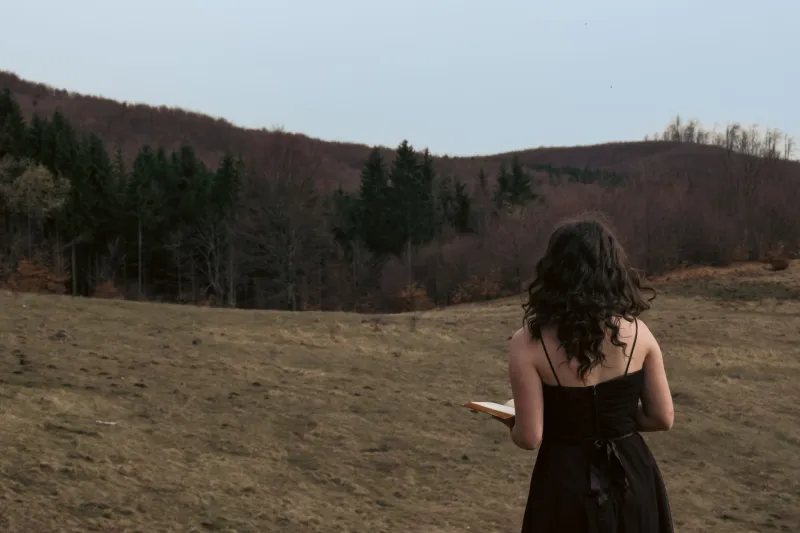
The woman standing at the edge of the overgrown drive had a printed Google Map in one hand and a battered paperback in the other. She'd driven eleven hours from outside of Columbus, Ohio, to stand in front of an abandoned farmhouse in Grainger County that she'd first read about in a self-published werewolf novel four years ago. The house in the book was fictional. The house in front of her was absolutely real, and it matched the description closely enough that she'd pulled over and started crying a little.
"I know it sounds intense," she said, not sounding particularly embarrassed about it. "But the book meant something to me. Coming here makes it feel true in a different way."
She's not alone. Not even close.
Fiction as a Map
Something interesting happens when a story is rooted deeply enough in real geography. Readers start treating it like a travel document. Literary tourism isn't a new concept — people have been visiting the moors because of Brontë and Dublin because of Joyce for generations. But the werewolf fiction coming out of Tennessee has generated a version of this phenomenon that's distinctly grassroots, distinctly internet-native, and distinctly weird in the best possible way.
Online communities — primarily organized through Reddit, Discord servers, and dedicated Facebook groups — have built detailed guides to Tennessee locations that appear in popular werewolf novels, short story collections, and even some fanfiction. Rogersville. Cades Cove. The stretch of highway outside of Wartburg where three different authors, apparently independently, set transformation scenes. Norris Dam at night. The back roads around Frozen Head State Park.
These aren't official tourism products. Nobody's getting a commission. They're just readers who love a place they've never been to because someone wrote about it with enough specificity and passion that it became real to them.
The Routes People Are Actually Taking
The most popular pilgrimage circuit — loosely organized and constantly being updated in online communities — runs a rough loop through East Tennessee, hitting the Smoky Mountains foothills before curving north toward the Cumberland Plateau. It's not optimized for efficiency. It's optimized for atmosphere.
Participants recommend driving it in late October or early November, when the leaves have mostly turned and the ridgelines get that particular quality of light that everyone describes the same way: like the mountains are paying attention to you.
Specific stops vary by which books or stories a given traveler is prioritizing, but a few locations come up consistently. Abrams Creek in the Great Smoky Mountains National Park has appeared in enough fiction that the trail there has acquired an unofficial reputation among fans. The historic district of Jonesborough — Tennessee's oldest town — draws visitors who've read any number of stories that use its preserved architecture as a backdrop for supernatural intrigue. The community of Rugby, the Victorian-era utopian colony that never quite became what its founders hoped, shows up in fiction with a frequency that probably says something about how writers process beautiful, slightly melancholy failures.
"Rugby is genuinely eerie in a way that's hard to explain," said Marcus Webb, a paranormal tourism enthusiast from Memphis who's done the East Tennessee circuit twice. "The buildings are all still there, it's immaculately preserved, and it's just... quiet. You understand immediately why writers keep putting monsters in it."
What the Locals Think
Community reactions to becoming unexpected werewolf pilgrimage destinations are, predictably, mixed.
In some places, the attention has been quietly welcomed. Small businesses in towns that show up in popular fiction have noticed upticks in out-of-state visitors who are clearly there for reasons that go beyond standard leaf-peeping. A bookstore owner in one small Appalachian town — she asked that the town not be named, worried about being overwhelmed — said she'd started quietly stocking regional paranormal fiction after noticing that visiting fans kept asking for it.
"They come in and they want to talk about the books for hours," she said, sounding more charmed than burdened by this. "These are people who've really read. Really thought about it. It's kind of refreshing."
Other communities are more ambivalent. A few locations have become associated with fiction that locals find unflattering — stories that lean into poverty, decay, or backwardness as aesthetic texture. The line between celebrating Appalachian strangeness and exploiting it is one that outside visitors don't always navigate gracefully, and some residents are understandably protective of how their home gets represented and consumed.
The Thing They're Really Looking For
Spend enough time talking to people who make these trips and a theme emerges that goes beyond simple fandom. Many of them are looking for something harder to name than a filming location or a real-world version of a fictional setting.
They're looking for the feeling the book gave them — that particular combination of dread and belonging and wildness — and they're hoping the actual landscape can deliver some version of it. Sometimes it does. The Smokies at dusk, when the mist comes down off the ridges and the forest goes very still, will do things to your imagination that no amount of description fully prepares you for.
"You read about the mountains and you think you understand," said the woman in Grainger County, still holding her paperback, looking at the farmhouse. "Then you stand in front of them and you realize the writers were actually understating it."
She took a photograph. She got back in her car. She drove deeper into the hills.
Somewhere up there, the stories are still running.