The Ones Who Almost Howled Loudest: Tennessee's Forgotten Werewolf Writers

Every now and then, someone digs through a dusty archive or stumbles across a self-published paperback at a Knoxville estate sale, and the whole conversation about werewolf fiction shifts just a little. Not because the book made a bestseller list. Not because some streaming exec optioned it. But because the writing is that good — and the question of why nobody noticed becomes impossible to shake.
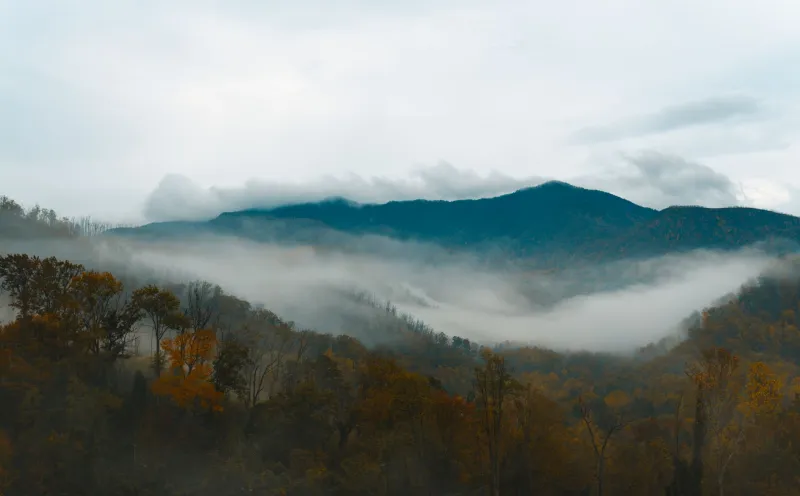
Tennessee has always been fertile ground for the supernatural. The fog sitting low in the Smokies, the old-growth hollers that swallow sound, the oral traditions passed down through generations of mountain families — it all adds up to something that practically writes itself. And yet, a small but remarkable group of Tennessee authors who worked squarely in the werewolf and shapeshifter lane spent careers producing genuinely original work that mainstream publishing largely walked right past.
We think that's worth talking about.
Earl Maynard Tilson and the Shape-Changer of Sevier County
If you've spent any time in used bookshops between Gatlinburg and Maryville, you may have come across a slim, sun-faded paperback called The Skin Road. Published in 1983 through a small Knoxville press that folded two years later, it was written by Earl Maynard Tilson, a former schoolteacher from Sevierville who spent twenty years quietly building one of the most distinctive werewolf mythologies ever set in the American South.
Tilson's shapeshifter wasn't the European lycanthrope transplanted to American soil. His creature — he called it a walkerhide — drew directly from Cherokee oral traditions he had spent years researching with community elders. The transformation in his fiction wasn't a curse or a disease. It was a covenant, something entered into deliberately, with consequences that rippled across family lines for generations. The horror wasn't in the monster. It was in the inheritance.
The Skin Road sold maybe three hundred copies. Tilson wrote two sequels that were never published. His manuscripts, according to his granddaughter who spoke to a regional literary journal in 2019, are sitting in boxes in a storage unit outside of Pigeon Forge. If anyone from a publishing house is reading this — and we genuinely hope someone is — that's a phone call worth making.
Dorinda Faye Combs and the Howl No One Would Print
Dorinda Faye Combs was a librarian in Johnson City for most of her adult life, and she wrote werewolf fiction the way some people tend a garden: steadily, carefully, without much expectation of applause. Between 1991 and 2008, she completed four novels and somewhere north of thirty short stories, nearly all of them centered on a fictional hollow in the mountains of East Tennessee where shapeshifting ran in certain bloodlines the way musical talent or stubbornness might in others.
What made Combs different was her attention to the social architecture of her fictional community. Her werewolves had church committees and grudges about property lines. They argued about whether to tell their children what they were before or after puberty. They fell in love badly and sometimes well. The supernatural element was almost incidental to the larger story she was telling about isolation, belonging, and the weight of things you can't explain to outsiders.
She submitted her first novel, Low Ground, Full Moon, to seventeen publishers over six years. The rejections were consistent: too regional, too quiet, not enough action. She kept writing anyway. A small but devoted readership found her through word of mouth, and a few of her short stories appeared in regional literary magazines that no longer exist. She passed away in 2014 without ever landing a major deal.
In the current publishing environment — where Yellowjackets and Outer Banks have proven that regional specificity is a feature, not a bug — Combs' catalog reads like a streaming series waiting to happen.
Why Appalachian Werewolf Fiction Keeps Getting Overlooked
There's a pattern here that's hard to ignore. The writers we're talking about weren't producing rough drafts or vanity projects. They were doing serious, considered work that happened to be rooted in a geography and a cultural sensibility that mainstream publishing has historically treated as niche at best and unmarketable at worst.
Appalachia, as a setting, carries a specific kind of baggage in the American imagination. It gets flattened into poverty tourism or used as shorthand for isolation and backwardness. What Tilson, Combs, and others like them were doing was something far more interesting — they were using the werewolf as a lens to examine what it actually means to come from a place that the rest of the country has decided it already understands.
That's rich material. That's the kind of specificity that makes fiction land.
The streaming platforms currently in a full sprint toward fresh paranormal IP would do well to start looking south of the Mason-Dixon line and east of Nashville. The mythology is already there. The stories have already been written. They're just sitting in storage units and out-of-print paperbacks, waiting.
What a Second Look Could Mean
We're not suggesting that every unpublished manuscript from a Tennessee writer is a hidden masterpiece. That's not how any of this works. But the specific combination of Appalachian folklore, genuine regional knowledge, and willingness to let the supernatural do something more than just frighten — that combination is rare, and it shows up with unusual frequency in the work of writers who built their careers here.
The conversation around werewolf fiction has been dominated for decades by European mythological frameworks and, more recently, by the urban fantasy boom that moved everything into anonymous cities. There's nothing wrong with either of those traditions. But there's a whole other lane that's barely been explored — one where the transformation isn't a metaphor for adolescence or a romance plot device, but something older and more complicated, braided into the land itself.
Tennessee's forgotten werewolf writers were working in that lane. Some of them worked their whole lives in it. The least we can do is make sure people know they existed.
If you've got a lead on unpublished manuscripts, regional small-press releases, or writers working in this space right now, drop us a line. This is exactly the kind of story we're here to chase down.