The Mountains That Bite Back: Unpacking the Smoky Mountains' Ancient Shape-Shifter Soul
The Mountains That Bite Back: Unpacking the Smoky Mountains' Ancient Shape-Shifter Soul
There's a moment, if you've ever driven the Newfound Gap Road after dark, where the fog rolls in so thick the headlights just bounce back at you like a wall. The tree line disappears. The road narrows to a gray tunnel. And somewhere out there, past the guardrail and the drop-off, something is moving through the rhododendron thickets that hasn't been properly named yet.
That feeling — that specific, stomach-dropping sense that the mountain is watching you — isn't a modern invention. It's been baked into this landscape for a very long time. The Great Smoky Mountains didn't become America's most fertile ground for shape-shifter mythology by accident. They earned it, layer by layer, story by story, over thousands of years of human beings trying to make sense of a wilderness that simply refuses to be tamed.
Before the Settlers Showed Up, the Stories Were Already Here
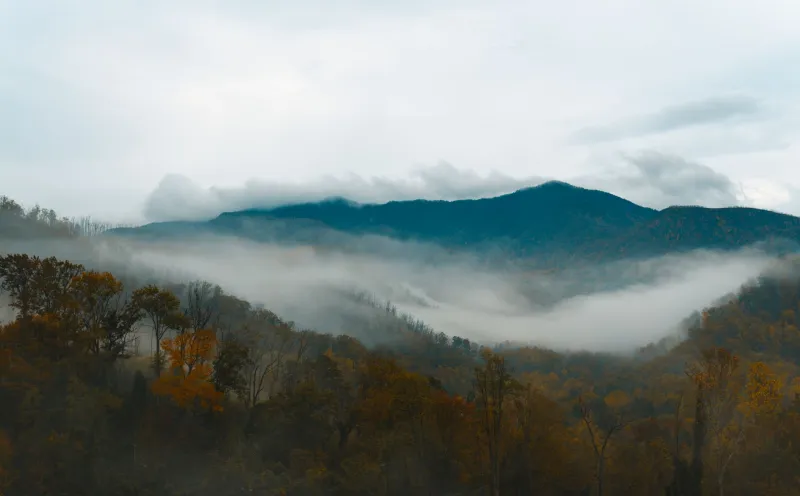
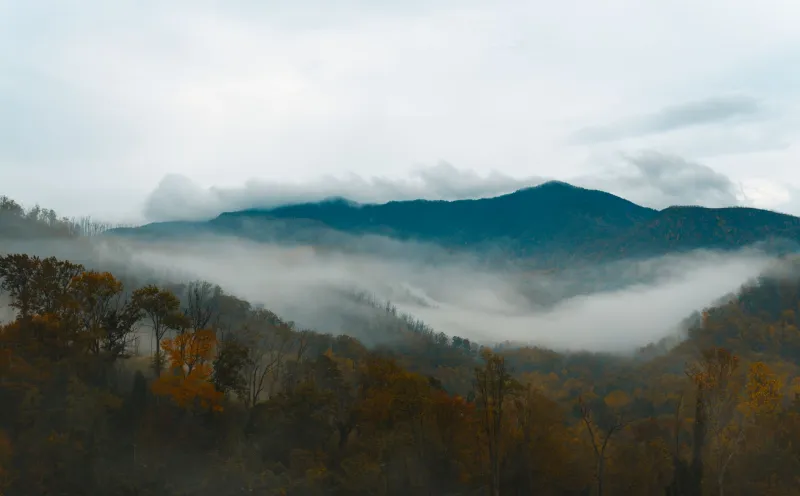
The Cherokee people have called the Smokies home for well over a thousand years, and their relationship with the land produced one of North America's richest bodies of supernatural tradition. The mountains themselves — called Shaconage, meaning "place of blue smoke" — were understood not as a backdrop to life but as an active, sentient force. The mist that gives the range its name wasn't just weather. It was considered a kind of breath, a sign that the land itself was alive and paying attention.
Within Cherokee cosmology, the boundary between human and animal was never as fixed as European traditions liked to pretend. Shape-shifting figures appear throughout the oral record, most notably the Raven Mocker — a witch capable of taking animal form — and various accounts of beings that moved between human appearance and something altogether wilder depending on need, mood, or spiritual state. These weren't monsters in the Western horror-movie sense. They were complicated, morally ambiguous figures that reflected the Cherokee understanding that nature doesn't sort itself into clean categories.
The specific wolf connection runs deep. Wolves were both respected and feared in Cherokee tradition, associated with warfare clans and with the kind of fierce, pack-oriented loyalty that the culture valued. A being that could harness wolf nature wasn't simply a predator — it was something that had accessed a particular kind of power. That nuance matters when we start tracing how these ideas eventually collided with European werewolf mythology.
The Scots-Irish Brought Their Own Monsters
When Scots-Irish settlers began pushing into the Appalachian highlands in the 18th century, they didn't arrive empty-handed, mythologically speaking. They brought with them a whole cargo of Old World supernatural belief — fairy lore, witch traditions, and yes, shape-shifter stories rooted in Scottish and Irish folk memory. The werewolf concept, in various forms, had been circulating in European peasant culture for centuries before anyone set foot on a boat to the New World.
What happened in the hollows of the Smokies was a slow, largely undocumented collision between these two traditions. Settlers interacted with Cherokee neighbors, traded stories alongside goods, and both groups were trying to explain the same unsettling landscape. The deep coves — those enclosed, fog-prone valleys where sound behaves strangely and the canopy is so thick that midday can feel like dusk — were places where European and Indigenous supernatural frameworks found unexpected common ground.
By the 19th century, Appalachian oral tradition had developed what folklorists sometimes call a distinctly hybrid quality. The shape-shifter stories that circulated through communities in Sevier and Swain counties didn't map cleanly onto either Cherokee tradition or European werewolf mythology. They were something new — something local. Creatures that moved on two legs and four, that were drawn to certain hollows at certain times of year, that left tracks in creek mud that no naturalist could confidently identify.
Why This Landscape Makes Monsters
It's worth pausing here to ask a practical question: why the Smokies specifically? Tennessee is a big state. Why did this particular stretch of mountains become such a concentrated hotbed of shape-shifter lore?
The geography is doing a lot of the work. The Smokies are old mountains — some of the oldest exposed rock on the planet — and their age shows in their character. The terrain is deeply folded, full of microclimates and hidden spaces. A cove that sits two miles from a well-traveled road can feel like another world entirely. The biodiversity is extraordinary; the park today contains more tree species than all of northern Europe, and that biological richness creates a soundscape and a visual density that genuinely disorients people who aren't used to it.
The fog, of course, is the signature element. Formed by the transpiration of all that dense vegetation, the mist in the Smokies behaves in ways that feel almost deliberate. It pools in valleys, follows creek beds, obscures familiar landmarks, and creates the kind of isolation that the rational mind struggles with. When you can't see twenty feet in front of you and you're hearing sounds from a forest that contains black bears, wild boar, and any number of creatures you can't identify, your brain starts reaching for explanations. Story is one of the oldest explanations we have.
From Ghost Stories to Ghost Tours
The 20th century brought roads, national park designation, and eventually mass tourism to the Smokies — and none of that killed the mythology. If anything, it amplified it. The region around Gatlinburg and Cherokee became one of the most visited areas in the entire National Park System, and with that visibility came a renewed interest in the area's stranger stories.
Paranormal tourism is now a legitimate economic sector in the Smokies. Ghost tours operate out of Gatlinburg. The Museum of Appalachia in Norris preserves artifacts and oral histories that brush up against the supernatural. Local guides — some of them drawing on genuine family oral tradition, others working a more theatrical angle — take visitors into the hollows at night and let the landscape do what it's always done: unsettle, suggest, and refuse to fully explain itself.
For werewolf fiction writers, this living tradition is gold. The Smokies aren't just a pretty setting. They're a place with genuine mythological bones, where the shape-shifter story has been evolving in real time for centuries. The Cherokee elder who described a figure moving through the laurel thickets at the edge of firelight, the 19th-century settler who swore the tracks outside his barn didn't belong to any animal he'd ever hunted, the hiker who came back from a solo overnight with something she couldn't quite describe — they're all part of the same long conversation.
The Mountain as Character
Here's what makes the Smokies different from every other werewolf setting you could choose: the mountain has agency. It's not passive scenery. The weather changes without warning. The trails that were clear at noon are under three feet of cloud by four in the afternoon. The forest absorbs sound in ways that make distance impossible to judge. Animals move through it at night in total silence.
Any writer who's spent real time in the backcountry of Great Smoky Mountains National Park knows that the landscape pushes back. It has opinions. It creates situations. And when you're deep in a cove at dusk, watching the mist come up from the creek bottom while something large moves through the brush on the far bank, you're not just experiencing nature. You're experiencing a story that's been telling itself for a very, very long time.
The howl that comes back from these mountains doesn't echo. It answers.